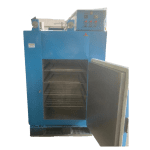
An industrial drying oven is a specialized equipment designed to remove moisture or solvent from materials or products through controlled heating in a closed environment. These ovens are commonly used in various industries, such as food processing, pharmaceuticals, textiles, electronics, and manufacturing, where precise drying is crucial to product quality and performance. Key Features of Industrial Drying Ovens: - Heating System:
- Electric, gas, or steam heating systems are commonly used to raise the temperature inside the oven. These heating elements are designed to provide a consistent temperature for optimal drying. The heating systems can be customized for different temperature ranges depending on the materials being processed (e.g., low-temperature drying for sensitive products or higher temperatures for robust items).
- Air Circulation and Blower System:
- A forced-air circulation system ensures that heated air is evenly distributed throughout the oven chamber. This uniform airflow helps eliminate hot spots and ensures consistent drying across all materials. The air movement helps speed up the drying process by enhancing moisture evaporation from the material’s surface.
- Temperature and Humidity Control:
- Industrial drying ovens often feature precise temperature control through thermostats or digital controllers. Some advanced models also include humidity control systems to regulate the moisture level inside the oven. PID controllers (Proportional-Integral-Derivative) are often used for finer control of both temperature and air circulation, ensuring accuracy in the drying process.
- Insulation:
- High-quality thermal insulation is used to maintain consistent temperatures inside the oven and minimize heat loss, which improves energy efficiency.
- Safety Features:
- Over-temperature protection, automatic shut-off, and overcurrent protection are common safety features to prevent overheating or electrical issues. Some ovens include alarms or sensors to detect moisture levels or to alert operators in case of system malfunctions.
- Ventilation and Exhaust System:
- Ventilation is essential to allow the moisture to escape the oven as it evaporates. The exhaust system ensures that the air inside the oven can carry away the moisture, which is especially important in high-humidity drying processes. Some ovens have adjustable exhaust vents to allow for controlled release of moisture or gases.
Common Applications: - Food Processing:
- Dehydration of fruits, vegetables, meat, or herbs to increase shelf life.
- Baking and drying of products like bread, cookies, or snacks.
- Drying liquids to powders or granules in the food and beverage industry.
-
- Pharmaceuticals:
- Drying pharmaceutical powders, granules, tablets, or active ingredients after mixing, granulating, or coating.
- Solvent removal from materials used in drug formulation, ensuring that the end product meets the required specifications.
-
- Textiles:
- Drying fabrics or garments after they have been washed or treated with chemicals or dyes.
- Pre-drying of materials before further processing, such as coating, printing, or finishing.
-
- Electronics:
- Drying circuit boards or other electronic components after washing or coating.
- Moisture removal from delicate electronics parts that need to be kept dry during manufacturing or packaging.
-
- Plastics and Rubber:
- Drying plastic parts or rubber components to remove residual moisture before molding or processing.
-
- Automotive:
- Used for drying coatings, paints, or adhesives applied to automotive parts or components.
-
- Metalworking:
- Used for drying or curing coatings, lubricants, or other materials used in metal parts manufacturing.
Benefits of Industrial Drying Ovens: Uniform Drying: The forced-air circulation ensures even moisture removal from materials. Energy Efficiency: Proper insulation and air circulation design reduce energy consumption. Controlled Drying: Temperature and humidity controls allow precise drying, preventing product degradation or damage. Flexibility: These ovens can be customized for different products and processes, from low-volume batches to high-speed continuous operations. Product Quality: By using the right drying conditions, product integrity is maintained, preventing issues like warping, cracking, or poor texture. |