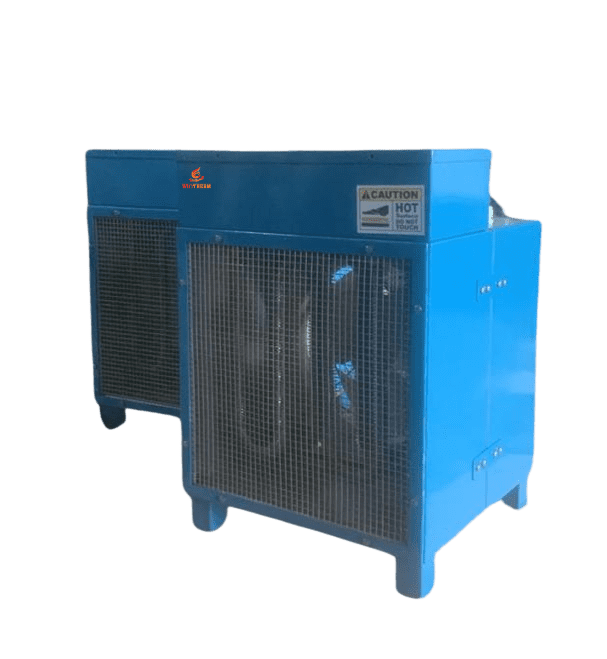
An industrial hot air blower oven is a specialized equipment that combines both hot air circulation and heating elements to provide a controlled and uniform environment for various industrial processes, such as drying, curing, baking, or heating. These ovens use hot air blowers to circulate heated air evenly throughout the chamber, ensuring efficient and consistent temperature distribution. This design is particularly useful when large quantities of items need to be processed simultaneously or when exact control of temperature and air flow is required.
Key Features of an Industrial Hot Air Blower Oven:
- Heating System:
- The oven uses a heating element (electric, gas, or steam) to raise the temperature of the air inside the chamber.
- Some models allow the air to be heated to very high temperatures, up to 250°C (482°F) or more, depending on the application.
-
- Air Circulation (Blower System):
- High-efficiency blowers circulate the hot air throughout the oven, ensuring even heat distribution. This helps reduce hot spots and allows for consistent heating of the products or materials. The blowers may be adjustable to control airflow speed and direct the hot air to specific areas within the oven for targeted heating.
-
- Temperature Control:
- Industrial hot air blower ovens typically come with precise temperature controls that allow users to set and maintain specific temperatures, which is critical for processes like curing or drying. Many ovens feature digital controllers, thermocouples, and PID controllers to ensure accurate temperature regulation.
-
- Insulation:
- These ovens are generally well-insulated to prevent heat loss and improve energy efficiency. Insulation materials like mineral wool or ceramic fiber are commonly used to keep the oven temperature stable and reduce energy consumption.
-
- Ventilation and Exhaust System:
- Proper ventilation and exhaust systems are essential in industrial ovens to remove excess moisture, fumes, or gases produced during the heating process, ensuring a safe and clean environment.
-
- Safety Features:
- Overheating protection, automatic shutoff systems, and overcurrent protection help ensure safety during operation.
- Some ovens may also include alarm systems to alert operators in case of system failure or temperature irregularities.
-
Common Applications:
- Curing and Baking:
- Paint and Coatings: Industrial hot air blower ovens are often used for curing paint, coatings, and varnishes on metal, wood, and other materials. The even airflow ensures that the coating hardens uniformly.
- Food Processing: They are used for drying, baking, or curing food products, such as snacks, dried fruits, or baked goods.
-
- Drying:
- Textiles and Paper: Hot air blower ovens help dry fabrics, garments, or paper products efficiently by circulating heated air.
- Pharmaceuticals: They are used in pharmaceutical industries for drying active ingredients, granules, or tablets.
-
- Plastic and Rubber Processing:
- For curing rubber or plastics, these ovens help achieve the desired material properties by applying consistent heat over time.
-
- Electronics and Components:
- Used to dry electronic parts, especially during the manufacturing of circuit boards or the curing of coatings applied to components.
-
- Automotive and Aerospace:
- Used for curing parts and coatings, such as metal components, polymers, and composites, that require consistent, high heat for performance and durability.
-
Benefits of Industrial Hot Air Blower Ovens:
Uniform Heating: The hot air blower ensures consistent and uniform temperature distribution, reducing the risk of uneven curing or drying.
Energy Efficiency: These ovens are often designed with insulation and advanced airflow systems to reduce energy consumption and improve process efficiency.
Flexible Applications: Hot air blower ovens can be used for a wide range of materials and processes, making them versatile for various industries.
Reduced Processing Time: The rapid airflow helps speed up drying or curing processes compared to traditional methods.
|